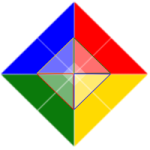
Red Energy describes a direct, action-oriented and results-focused behavioural preference. People displaying strong Red Energy tend to value achievement, speed, challenge and getting things done. At its best, it brings confidence, determination and purposeful action. When overextended, it can become impatient, controlling or confrontational.
When someone with a preference for Red Energy arrives on the scene, other people take notice! It’s as if there is something in the air that says, “We’re getting serious now and we’re going to get this done.”
People who have a first preference for this energy value ACHIEVEMENT and RESULTS. They want to make things happen, overcome obstacles and see progress. Their tagline might simply be: “Just Do It.”
Is Red Energy a personality type?
Red Energy is sometimes described as a personality type, particularly when people are looking for ways to understand different working and communication styles.
It is more useful, however, to think of it as a behavioural preference rather than a type of person.
Everyone can display Red Energy. The difference is how naturally we draw upon it, how frequently we use it and what happens when we overextend it.
Someone with a strong preference may therefore behave differently depending on the situation, the people around them and the pressure they are experiencing.
Understanding the energy behind the behaviour helps us move beyond simply labelling someone as a “Red personality”.
What does Red Energy behaviour look like?
People with a preference for Red Energy are active and move in a positive and forward direction. They have a strong determination that influences those they interact with and are single-minded in their focus on results.
They approach others in a straightforward manner and value competence, efficiency and effectiveness.
Red Energy – Proactive Traits
When dealing with this type of manager they would prefer you to be brief, bright and then go, as they are busy with lots to do.
The important thing is to see these traits as behaviour in action.
n a meeting, this may be the person asking, “So what are we actually going to do?”
Red Energy can bring momentum to a team because it is naturally drawn towards action and results.
How does Red Energy communicate?
Communication tends to be direct and purposeful.
Someone displaying a strong preference will usually want to understand the point of the conversation, what needs to happen and what decision needs to be made. Long explanations without a clear purpose can quickly become frustrating.
When dealing with a Red Energy manager, “brief, bright and then go” can be a useful principle. They are likely to be busy, focused on their priorities and looking for the information they need to act.
This directness can be extremely useful. It creates clarity and can prevent teams from avoiding difficult issues.
However, what one person regards as being clear and straightforward can sometimes be experienced by others as abrupt or insensitive. Effective communication therefore involves recognising not only what needs to be said, but how other people may receive it.
What happens to Red Energy under pressure?
The strengths associated with any Colour Energy can become less effective when they are overextended.
The determination that helps someone overcome obstacles can become impatience. Directness can become bluntness. A desire for control over an important outcome can become over-controlling behaviour.
Red Energy – Reactive Traits
When the behaviour becomes reactive, it may include:
Clearly, you cannot achieve a high level of team performance if you are a team of one.
With a strong focus on the task and achieving the desired result, someone with this preference can sometimes overlook the needs of the people helping to achieve those results.
They become more effective when they pay attention to the needs of the team and recognise when a more supportive approach is required.
Reactive behaviour does not mean that someone has suddenly become a different “type” of person. It often means that useful strengths are being overextended or used in circumstances where a different behaviour would be more effective.
Recognising that shift is an important part of behavioural awareness.
What is Red Energy leadership like?
Many people imagine that leaders with a preference for Red Energy would enjoy cracking the whip. Perhaps, on occasion, this might be the case. On the whole, though, there is usually no need for whip cracking.
Contrary to the stereotype, this preference can produce an extremely loyal leader.
If you are part of their team, they are likely to protect you. They can be quite happy to say NO to nonsense from above and will keep people focused on the team’s goals.
They may defend their team to the hilt and take the heat for them — although you can probably expect some direct criticism and feedback afterwards!
Generally speaking, leaders with this preference:

How do you work effectively with Red Energy?
Working effectively with someone displaying strong Red Energy doesn’t mean trying to behave exactly as they do.
It means understanding what they are likely to value and adapting your communication sufficiently to make the interaction work.
When communicating with strong Red Energy:
Good behavioural awareness works both ways. Red Energy can also improve its effectiveness by recognising that other people may need something different before they can contribute at their best.
How does Red Energy work with the other Colour Energies?
Different Colour Energies can create both productive tension and friction. Neither response is inevitable; much depends on whether people understand what is driving the behaviour they see.
Red and Yellow Energy can create tremendous pace, enthusiasm and action. Both can enjoy momentum, although the combination may need to pay additional attention to detail and follow-through.
Red and Green Energy can approach situations from very different starting points. Red may focus first on the task and required outcome, while Green pays greater attention to people, relationships and the impact of decisions. When understood, these differences can complement each other rather than create frustration.
Red and Blue Energy often encounter the tension between speed and analysis. Red may want to make the decision and move; Blue may want more evidence and greater certainty first. Used well, the combination brings together purposeful action and careful thinking.
The value of Colour Energies isn’t deciding which approach is right. It is recognising what each energy contributes and what the situation actually requires.
Questions about Red Energy
Take your understanding of Red Energy further
Recognising Red Energy is useful. Seeing how it interacts with the other Colour Energies is where things become much more interesting.
The Colour Energies Card Game provides a practical way for teams to explore their different behavioural preferences, discuss how those differences affect communication and discover what happens when strengths become overextended.
For teams wanting to explore their dynamics in greater depth, Colour Energy behavioural profiles and facilitated team development provide a more detailed understanding of individual preferences and the way they combine across a team.
Yellow Energy – In a Nutshell
Blue Energy – In a Nutshell
Green Energy – In a Nutshell
Can You Use Colour Energies Activities with DISC Profiles?