A good behavioural profile can create some powerful moments of recognition.
This article is part of our Team Communication Insights Centre.
Explore more Behavioural Profiling →
Behavioural profiles are widely used in organisations to help people understand themselves and the people they work with.
Tools such as Insights Discovery, DISC, C-me and Lumina Spark use different models and terminology, but they share a broadly similar purpose: helping people recognise patterns in the way they prefer to communicate, make decisions, approach tasks and interact with others.
A good behavioural profile can create some powerful moments of recognition.
“Yes, that sounds exactly like me.”
“Now I understand why we approach meetings so differently.”
“That explains why we sometimes frustrate each other.”
But what does a behavioural profile actually tell you?
And perhaps more importantly:
What doesn’t it tell you?

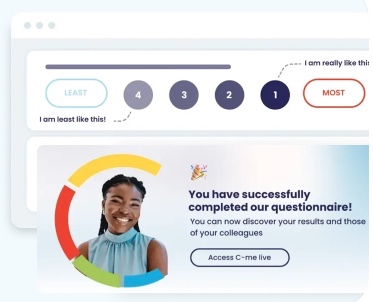
What is a behavioural profile?
A behavioural profile is a structured way of exploring patterns and preferences in how someone is likely to approach situations, tasks and relationships.
Depending on the profiling model being used, it might explore things such as:
- communication preferences
- decision-making
- pace and approach to tasks
- interaction with other people
- responses to change
- strengths and potential challenges
- preferred working environments
- how someone may behave under pressure
Some models use personality types. Others use dimensions, traits, colours or combinations of behavioural preferences.
The terminology varies. The important word, however, is preference.
A behavioural profile isn’t a complete description of a person. It provides a framework for recognising tendencies that may influence behaviour.
That distinction matters.
Behavioural preferences aren’t boxes
One of the easiest mistakes to make after a profiling workshop is to turn a useful behavioural model into a collection of labels.
“She’s Red.”
“He’s definitely a Blue.”
“That’s just the Yellow in me.”
Colour-based behavioural models are particularly susceptible to this because colours provide such an easy shorthand.
The shorthand can be useful.
The problem begins when the shorthand becomes the explanation.
People are considerably more complex than four colours, four letters or a collection of scores on a graph.
- We adapt.
- Context matters.
- Relationships matter.
- The environment matters.
The same person may behave very differently when presenting to a room of colleagues, resolving a difficult customer problem, working alone on a complex task or having a conversation with someone they trust.
A profile therefore provides a lens through which to explore behaviour rather than a label that defines it.
What can a behavioural profile tell you?
Used well, behavioural profiling can help make previously invisible differences easier to discuss.
Imagine two colleagues working together.
- One wants to reach a decision quickly.
- The other wants more information before committing.
Without a useful framework, each person may interpret the other’s behaviour personally.
One thinks: “Why do they make everything so complicated?”
The other thinks: “Why do they always rush things?”
Neither interpretation is particularly helpful. A behavioural profile provides another possibility.
Perhaps they simply have different preferences around pace, information and decision-making.
That small shift can change the conversation from:
“Why are you like this?”
to:
“What do you need from me for us to work better together?”
And that’s where behavioural profiling becomes valuable.
What are behavioural profiles useful for?
Profiles can create a common language for conversations that might otherwise be difficult to have.
They can help teams explore questions such as:
- How do we communicate?
- How do we make decisions?
- What happens when we’re under pressure?
- Whose voices tend to dominate our discussions?
- Whose contributions might we overlook?
- Where might our different preferences complement each other?
- Where might those same differences create friction?
The profile itself doesn’t resolve these questions.
It makes them easier to discuss.
That distinction is fundamental.
What can’t a behavioural profile tell you?
A behavioural profile cannot tell you everything about somebody.
It doesn’t tell you precisely what somebody will do in every situation.
It doesn’t determine whether someone will be a good leader.
It doesn’t automatically predict whether two people will work well together.
And it shouldn’t be used to justify behaviour:
“That’s just my profile.”
Perhaps most importantly, a behavioural profile doesn’t change behaviour by itself.
Receiving a detailed report about yourself can be fascinating.
Recognising your preferences can be illuminating.
But knowing something and doing something differently are not the same thing.
That’s why the conversation after profiling matters so much.
The profile is the beginning, not the destination
Imagine a team completes behavioural profiles and attends a workshop.
Everyone receives their report.
There are discussions about strengths, preferences and communication styles.
People compare profiles.
There may even be a team wheel or similar visual representation showing the collective preferences of the group.
Everyone leaves enthusiastic.
Then Monday morning arrives.
- Emails need answering.
- Customers need supporting.
- Deadlines return.
- Meetings fill the diary.
Unless something deliberately carries the conversation forward, the insights generated during the workshop gradually disappear into everyday working life.
The profiles may remain in a drawer or folder.
The challenge therefore isn’t simply:
How do we help people understand their behavioural preferences?
It’s:
How do we help people use that understanding when they’re actually working together?
From behavioural awareness to better conversations
This is where behavioural profiling can become considerably more useful.
Instead of treating a profile as the outcome, treat it as the beginning of a conversation.
For example:
Rather than simply recognising that somebody prefers more detail, ask:
“What information would help you feel comfortable making this decision?”
Rather than describing someone as highly task-focused, explore:
“What happens to our communication when we’re working under pressure?”
Rather than telling someone they have a particular colour preference, ask:
“How might other people experience this behaviour?”
These are much richer conversations.
They move the team beyond describing differences towards working with those differences.
Different profiles, similar opportunity
There are many behavioural profiling systems available.
Insights Discovery, DISC, C-me and Lumina Spark are among the better-known approaches, and each has its own methodology, terminology and application.
They shouldn’t simply be treated as interchangeable versions of the same product.
But from a team development perspective, they create a similar opportunity:
a structured starting point for conversations about behaviour.
The real organisational value doesn’t necessarily come from having the most detailed profile.
It comes from what people subsequently do with the insight.
Do they communicate differently?
Do they ask better questions?
Do they recognise when their own preferences are creating friction?
Do they adapt when somebody needs something different?
Do teams continue discussing behaviour after the workshop has finished?
Those are much more meaningful measures of success than whether somebody remembers the colour, letter or terminology assigned to their preferences.
Using colour energies without labelling people
Colour provides an especially accessible way of exploring behavioural differences.
People can quickly understand that different energies may bring different qualities to a team.
A preference for pace, action and challenge may be useful in one situation.
Careful analysis and attention to detail may be essential in another.
Enthusiasm and possibility can generate ideas.
Patience, support and careful listening can strengthen relationships.
None is inherently better than another.
And nobody needs to become somebody else.
The purpose is to develop enough awareness and flexibility to recognise:
What am I bringing to this situation?
What might somebody else need?
What could I do differently?
That is considerably more useful than simply knowing your “colour”.
Turning a behavioural profile into something useful
If your organisation already uses behavioural profiling, you don’t necessarily need another assessment.
You may simply need better ways of continuing the conversations your existing profiles started.
Try asking your team:
What have we actually changed since completing our profiles?
It’s a deceptively simple question.
If the answer is difficult to identify, the next step probably isn’t more awareness.
It’s creating opportunities for people to use what they already know.
That might happen through team conversations, facilitated exercises, regular reflection, feedback or practical activities that bring behavioural preferences back into everyday situations.
Because ultimately, the value of a behavioural profile isn’t what it tells you about yourself.
It’s what that understanding enables you to do differently with other people.
Continue exploring behavioural profiles
Behavioural profiling is only the starting point.
In the next articles in this series we’ll explore:
What’s the Difference Between Insights Discovery, DISC, C-me and Lumina Spark?
and
Do You Need a Behavioural Profile to Use the Four Colour Energies?
Together, these articles explore how behavioural models can be used practically without allowing the model itself to become the focus.
Return to the Team Communication insights Centre
Turning Awareness Into Action
This is where practical activities become valuable.
Not because people need another profile. But because they need opportunities to talk.
When teams discuss communication regularly:
- Awareness becomes understanding.
- Understanding becomes feedback.
- Feedback becomes action.
- Action becomes improvement.
That is where meaningful change begins.
Why Facilitation Matters
The most successful team development activities are rarely those that provide the most information.
They are the activities that generate the most meaningful discussion.
- When people exchange observations.
- Share perspectives.
- Challenge assumptions.
- Recognise strengths.
- Acknowledge blind spots.
The conversation becomes more valuable than the model.
The framework simply provides a structure. The workshop facilitator provides the space.
Take a look at our free guide: 7 Questions That Improve Team Communication and learn how to improve team communication without another profile.
So What Happens Next?
If your team has recently completed a profile workshop, the next step is not another profile.
The next step is conversation.
Because communication does not improve when people complete a profile.
Communication improves when people start talking differently to one another.
A good behavioural profile can create some powerful moments of recognition.
This article is part of our Team Communication Insights Centre.
Explore more Behavioural Profiling →
Behavioural profiles are widely used in organisations to help people understand themselves and the people they work with.
Tools such as Insights Discovery, DISC, C-me and Lumina Spark use different models and terminology, but they share a broadly similar purpose: helping people recognise patterns in the way they prefer to communicate, make decisions, approach tasks and interact with others.
A good behavioural profile can create some powerful moments of recognition.
“Yes, that sounds exactly like me.”
“Now I understand why we approach meetings so differently.”
“That explains why we sometimes frustrate each other.”
But what does a behavioural profile actually tell you?
And perhaps more importantly:
What doesn’t it tell you?
What is a behavioural profile?
A behavioural profile is a structured way of exploring patterns and preferences in how someone is likely to approach situations, tasks and relationships.
Depending on the profiling model being used, it might explore things such as:
- communication preferences
- decision-making
- pace and approach to tasks
- interaction with other people
- responses to change
- strengths and potential challenges
- preferred working environments
- how someone may behave under pressure
Some models use personality types. Others use dimensions, traits, colours or combinations of behavioural preferences.
The terminology varies. The important word, however, is preference.
A behavioural profile isn’t a complete description of a person. It provides a framework for recognising tendencies that may influence behaviour.
That distinction matters.
Behavioural preferences aren’t boxes
One of the easiest mistakes to make after a profiling workshop is to turn a useful behavioural model into a collection of labels.
“She’s Red.”
“He’s definitely a Blue.”
“That’s just the Yellow in me.”
Colour-based behavioural models are particularly susceptible to this because colours provide such an easy shorthand.
The shorthand can be useful.
The problem begins when the shorthand becomes the explanation.
People are considerably more complex than four colours, four letters or a collection of scores on a graph.
- We adapt.
- Context matters.
- Relationships matter.
- The environment matters.
The same person may behave very differently when presenting to a room of colleagues, resolving a difficult customer problem, working alone on a complex task or having a conversation with someone they trust.
A profile therefore provides a lens through which to explore behaviour rather than a label that defines it.
What can a behavioural profile tell you?
Used well, behavioural profiling can help make previously invisible differences easier to discuss.
Imagine two colleagues working together.
- One wants to reach a decision quickly.
- The other wants more information before committing.
Without a useful framework, each person may interpret the other’s behaviour personally.
One thinks: “Why do they make everything so complicated?”
The other thinks: “Why do they always rush things?”
Neither interpretation is particularly helpful. A behavioural profile provides another possibility.
Perhaps they simply have different preferences around pace, information and decision-making.
That small shift can change the conversation from:
“Why are you like this?”
to:
“What do you need from me for us to work better together?”
And that’s where behavioural profiling becomes valuable.
What are behavioural profiles useful for?
Profiles can create a common language for conversations that might otherwise be difficult to have.
They can help teams explore questions such as:
- How do we communicate?
- How do we make decisions?
- What happens when we’re under pressure?
- Whose voices tend to dominate our discussions?
- Whose contributions might we overlook?
- Where might our different preferences complement each other?
- Where might those same differences create friction?
The profile itself doesn’t resolve these questions.
It makes them easier to discuss.
That distinction is fundamental.
What can’t a behavioural profile tell you?
A behavioural profile cannot tell you everything about somebody.
It doesn’t tell you precisely what somebody will do in every situation.
It doesn’t determine whether someone will be a good leader.
It doesn’t automatically predict whether two people will work well together.
And it shouldn’t be used to justify behaviour:
“That’s just my profile.”
Perhaps most importantly, a behavioural profile doesn’t change behaviour by itself.
Receiving a detailed report about yourself can be fascinating.
Recognising your preferences can be illuminating.
But knowing something and doing something differently are not the same thing.
That’s why the conversation after profiling matters so much.
The profile is the beginning, not the destination
Imagine a team completes behavioural profiles and attends a workshop.
Everyone receives their report.
There are discussions about strengths, preferences and communication styles.
People compare profiles.
There may even be a team wheel or similar visual representation showing the collective preferences of the group.
Everyone leaves enthusiastic.
Then Monday morning arrives.
- Emails need answering.
- Customers need supporting.
- Deadlines return.
- Meetings fill the diary.
Unless something deliberately carries the conversation forward, the insights generated during the workshop gradually disappear into everyday working life.
The profiles may remain in a drawer or folder.
The challenge therefore isn’t simply:
How do we help people understand their behavioural preferences?
It’s:
How do we help people use that understanding when they’re actually working together?
From behavioural awareness to better conversations
This is where behavioural profiling can become considerably more useful.
Instead of treating a profile as the outcome, treat it as the beginning of a conversation.
For example:
Rather than simply recognising that somebody prefers more detail, ask:
“What information would help you feel comfortable making this decision?”
Rather than describing someone as highly task-focused, explore:
“What happens to our communication when we’re working under pressure?”
Rather than telling someone they have a particular colour preference, ask:
“How might other people experience this behaviour?”
These are much richer conversations.
They move the team beyond describing differences towards working with those differences.
Different profiles, similar opportunity
There are many behavioural profiling systems available.
Insights Discovery, DISC, C-me and Lumina Spark are among the better-known approaches, and each has its own methodology, terminology and application.
They shouldn’t simply be treated as interchangeable versions of the same product.
But from a team development perspective, they create a similar opportunity:
a structured starting point for conversations about behaviour.
The real organisational value doesn’t necessarily come from having the most detailed profile.
It comes from what people subsequently do with the insight.
Do they communicate differently?
Do they ask better questions?
Do they recognise when their own preferences are creating friction?
Do they adapt when somebody needs something different?
Do teams continue discussing behaviour after the workshop has finished?
Those are much more meaningful measures of success than whether somebody remembers the colour, letter or terminology assigned to their preferences.
Using colour energies without labelling people
Colour provides an especially accessible way of exploring behavioural differences.
People can quickly understand that different energies may bring different qualities to a team.
A preference for pace, action and challenge may be useful in one situation.
Careful analysis and attention to detail may be essential in another.
Enthusiasm and possibility can generate ideas.
Patience, support and careful listening can strengthen relationships.
None is inherently better than another.
And nobody needs to become somebody else.
The purpose is to develop enough awareness and flexibility to recognise:
What am I bringing to this situation?
What might somebody else need?
What could I do differently?
That is considerably more useful than simply knowing your “colour”.
Turning a behavioural profile into something useful
If your organisation already uses behavioural profiling, you don’t necessarily need another assessment.
You may simply need better ways of continuing the conversations your existing profiles started.
Try asking your team:
What have we actually changed since completing our profiles?
It’s a deceptively simple question.
If the answer is difficult to identify, the next step probably isn’t more awareness.
It’s creating opportunities for people to use what they already know.
That might happen through team conversations, facilitated exercises, regular reflection, feedback or practical activities that bring behavioural preferences back into everyday situations.
Because ultimately, the value of a behavioural profile isn’t what it tells you about yourself.
It’s what that understanding enables you to do differently with other people.
Continue exploring behavioural profiles
Behavioural profiling is only the starting point.
In the next articles in this series we’ll explore:
What’s the Difference Between Insights Discovery, DISC, C-me and Lumina Spark?
and
Do You Need a Behavioural Profile to Use the Four Colour Energies?
Together, these articles explore how behavioural models can be used practically without allowing the model itself to become the focus.
Return to the Team Communication insights Centre
Turning Awareness Into Action
This is where practical activities become valuable.
Not because people need another profile. But because they need opportunities to talk.
When teams discuss communication regularly:
- Awareness becomes understanding.
- Understanding becomes feedback.
- Feedback becomes action.
- Action becomes improvement.
That is where meaningful change begins.
Why Facilitation Matters
The most successful team development activities are rarely those that provide the most information.
They are the activities that generate the most meaningful discussion.
- When people exchange observations.
- Share perspectives.
- Challenge assumptions.
- Recognise strengths.
- Acknowledge blind spots.
The conversation becomes more valuable than the model.
The framework simply provides a structure. The workshop facilitator provides the space.
Take a look at our free guide: 7 Questions That Improve Team Communication and learn how to improve team communication without another profile.
So What Happens Next?
If your team has recently completed a profile workshop, the next step is not another profile.
The next step is conversation.
Because communication does not improve when people complete a profile.
Communication improves when people start talking differently to one another.
Read other related articles.

What’s the Difference Between Insights Discovery, DISC, C-me and Lumina Spark? This article is part of our Team [...]
A good behavioural profile can create some powerful moments of recognition. This article is part of our Team Communication [...]