Mastering the Dynamics of Colour Energies
A practical Colour Energies workshop exploring how Red, Yellow, Green and Blue behavioural preferences influence communication, working relationships and collaboration.

Mastering the Dynamics of Colour Energies
A practical Colour Energies workshop exploring how Red, Yellow, Green and Blue behavioural preferences influence communication, working relationships and collaboration.
Event Information
Event Information
You know the colours. So why do people still frustrate each other?
You know the colours. So why do people still frustrate each other?
Understanding Colour Energies can give us a remarkably useful language for recognising different behavioural preferences.
We learn that some people are more direct and results-focused. Others need time to consider the detail. Some think aloud, generate possibilities and thrive on interaction. Others place greater importance on relationships, inclusion and how decisions affect people.
And yet simply knowing the colours doesn’t make difficult relationships disappear.
You can understand perfectly well that a colleague has different behavioural preferences from you — and still find yourself frustrated by the way they communicate, make decisions, respond to pressure or approach their work.
Mastering the Dynamics of Colour Energies goes beyond recognising the colours and explores what happens when those different energies actually meet.
Every team has tasks to accomplish, a future to create, people to engage and processes that make it work. Different Colour Energies bring different strengths — and different tensions — to each.
This workshop is about understanding those dynamics — and learning what we can do when they stop being productive.
Beyond knowing your colour
Beyond knowing your colour
If you’ve previously attended a Colour Energies, Insights Discovery, DISC, C-me or similar four-colour workshop, you’ll probably already recognise the four broad behavioural energies.
This workshop starts where those introductory sessions tend to finish.
Rather than asking:
“What colour am I?”
we begin asking more useful questions:
- What happens when my preferred energies meet yours?
- Why are some relationships naturally easier than others?
- Why can people who apparently want the same thing approach it so differently?
- What happens to our behaviour when tension appears?
And perhaps most importantly:
What can I change about the way I communicate to create a different response?
Begin with your own Colour Energies
We’ll start the workshop using the Colour Energies Virtual Card Game.
You’ll make your own selections and create a working benchmark of the Colour Energies preferences you recognise in yourself.
There is no requirement to purchase a behavioural profile to participate. The Virtual Card Game gives everyone a common starting point for exploring the dynamics during the workshop.
You’ll then use your own preferences throughout the session rather than simply learning about four abstract personality types.
If you would like to explore your preferences in greater depth, you can optionally complete a C-me behavioural profile before the workshop and add either a 30-minute or 60-minute personal feedback session.
Four dynamics that exist in every team
Four dynamics that exist in every team
The four Colour Energies don’t operate independently.
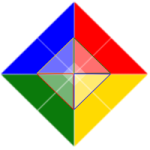
When neighbouring energies come together, they create four particularly important dynamics that we encounter continually in teams and working relationships.
PROCESS
BLUE & GREEN
Understanding, structure & stability
TASK
RED & BLUE
Drive to achieve ↔ need to get it right
PERSON
GREEN & YELLOW
Wider group ↔ Individual
FUTURE
YELLOW & RED
Possibility & ambition ↔ direction & action
The dynamics aren’t the problem
The dynamics aren’t the problem
Difference itself isn’t something we need to eliminate. In fact, these dynamics can be enormously valuable.
Task needs both achievement and quality.
Future needs both possibility and action.
Person needs both individual understanding and collective engagement.
Process needs both structure and consideration.
The difficulty begins when those differences become reactive rather than productive.
Under pressure, our behavioural preferences can become exaggerated.
Strengths can become less helpful.
- Directness can be experienced as aggression.
- Attention to detail can become obstruction.
- Enthusiasm can overwhelm.
- Consideration can appear indecisive.
And what we believe we’re communicating can be very different from what somebody else actually experiences.
Discover your Blind Spots
This is where we’ll introduce the Blind Spots Virtual Card Game.
Instead of simply asking:
“How do I see myself?”
we’ll explore a much more challenging question:
“What might other people experience when my preferred energies become reactive?”
We’ll revisit the four dynamics from this different perspective and explore what happens when our natural preferences become exaggerated under pressure.
The purpose isn’t to decide who is right and who is wrong.
It’s to recognise what may be happening between us.
From reaction to choice
One of the central ideas behind Mastering the Dynamics is that another person’s behaviour may create tension — but we still have choices about how we respond to it.
The objective isn’t to label the difficult person:
“They’re just being Red.”
Nor is it about suppressing your own preferences and pretending to become somebody you’re not.
Instead, greater awareness gives us more choices.
- Can I change the pace?
- Can I communicate the detail differently?
- Can I give someone more space to contribute?
- Can I become clearer about what I need?
- Can I recognise what the other person is trying to achieve or protect?
- Can I notice when my own strengths are becoming part of the problem?
The question gradually changes from:
“What colour is this person?”
to:
“What might this person need from me for this communication to work?”
And that’s where understanding Colour Energies begins to translate into better relationships.
Bring a real relationship with you
This is an interactive workshop, not a webinar.
You’ll have opportunities to work in pairs and small groups, explore the dynamics and apply what you’re learning.
We’ll also ask you to think about one real relationship from your working life.
- It might be somebody whose pace frustrates you.
- Someone you struggle to influence.
- A colleague whose attention to detail drives you mad.
- Someone who seems to turn every conversation into another conversation.
- Or simply somebody with whom communication takes far more effort than it should.
During the workshop, you’ll use the Colour Energies dynamics to look at that relationship differently.
You’ll leave with a practical Dynamics Action Plan identifying what may be happening between you and, crucially, what you can experiment with doing differently.
What will you take away?
By the end of Mastering the Dynamics, you’ll have a deeper understanding of your own behavioural preferences and how they interact with those of other people.
You’ll be better equipped to recognise productive and reactive dynamics, understand why certain behaviours trigger frustration, distinguish intention from impact and make more conscious choices about how you communicate.
You’ll also leave with practical ways of taking those conversations back into your team and workplace.
This isn’t about memorising another set of Colour Energy characteristics.
It’s about becoming more skilful at what happens between the colours.
Who is this workshop for?
Mastering the Dynamics is designed for people who already have some familiarity with Colour Energies or another four-colour behavioural model.
You might have previously completed an Insights Discovery, C-me, DISC or similar profile, attended a team workshop, or simply have a good working understanding of the four colours.
You do not need to know your exact profile or have completed formal accreditation.
The workshop is particularly relevant for managers, team leaders, facilitators, coaches, HR and L&D professionals, project leaders and anyone who regularly needs to work effectively across different behavioural preferences.
The principles explored in this workshop can also be applied more widely to team development and facilitated workshops within organisations.
If your previous colour workshop left you thinking:
“I understand the model — but how do I actually use this when relationships become difficult?”
this workshop is designed to answer that question.
An interactive workshop — limited to 18 participants
An interactive workshop — limited to 18 participants
This is deliberately not a large webinar. The workshop includes discussion, reflection, the Colour Energies Virtual Card Game, the Blind Spots activity and small-group exercises.
Places are therefore limited to 18 participants, allowing us to work in pairs, trios and small groups while ensuring everyone has the opportunity to participate.
Workshop place: £199 + VAT
Your place includes the live facilitated workshop, access to both virtual activities and the participant resources used during the session.
Want to make the experience personal?
Want to make the experience personal?
You can attend Mastering the Dynamics without completing a behavioural profile.
However, if you’d like to explore the dynamics through the lens of your own behavioural preferences, you can add a personal C-me behavioural profile when you book.
Three options are available:
C-me Behavioural Profile — £99 + VAT
C-me Profile + 30-minute Personal Feedback — £154 + VAT
C-me Profile + 60-minute Personal Feedback — £198 + VAT
If several colleagues are attending, you can choose the number of workshop places you require and then add different profile options and quantities before proceeding to checkout.
Ready to move beyond simply knowing the colours?
Ready to move beyond simply knowing the colours?
You’ve learned what the colours mean.
Now discover what happens between them.
Explore the dynamics that shape tasks, the future, people and processes. Recognise what happens when productive differences become reactive. And discover what you can do differently to change the conversation.
Book your place on Mastering the Dynamics of Colour Energies below ↓
You know the colours. So why do people still frustrate each other?
You know the colours. So why do people still frustrate each other?
Understanding Colour Energies can give us a remarkably useful language for recognising different behavioural preferences.
We learn that some people are more direct and results-focused. Others need time to consider the detail. Some think aloud, generate possibilities and thrive on interaction. Others place greater importance on relationships, inclusion and how decisions affect people.
And yet simply knowing the colours doesn’t make difficult relationships disappear.
You can understand perfectly well that a colleague has different behavioural preferences from you — and still find yourself frustrated by the way they communicate, make decisions, respond to pressure or approach their work.
Mastering the Dynamics of Colour Energies goes beyond recognising the colours and explores what happens when those different energies actually meet.
Every team has tasks to accomplish, a future to create, people to engage and processes that make it work. Different Colour Energies bring different strengths — and different tensions — to each.
This workshop is about understanding those dynamics — and learning what we can do when they stop being productive.
Every team has tasks to accomplish, a future to create, people to engage and processes that make it work. Different Colour Energies bring different strengths — and different tensions — to each.
This workshop is about understanding those dynamics — and learning what we can do when they stop being productive.
Beyond knowing your colour
Beyond knowing your colour
If you’ve previously attended a Colour Energies, Insights Discovery, DISC, C-me or similar four-colour workshop, you’ll probably already recognise the four broad behavioural energies.
This workshop starts where those introductory sessions tend to finish.
Rather than asking:
“What colour am I?”
we begin asking more useful questions:
- What happens when my preferred energies meet yours?
- Why are some relationships naturally easier than others?
- Why can people who apparently want the same thing approach it so differently?
- What happens to our behaviour when tension appears?
And perhaps most importantly:
What can I change about the way I communicate to create a different response?
Begin with your own Colour Energies
We’ll start the workshop using the Colour Energies Virtual Card Game.
You’ll make your own selections and create a working benchmark of the Colour Energies preferences you recognise in yourself.
There is no requirement to purchase a behavioural profile to participate. The Virtual Card Game gives everyone a common starting point for exploring the dynamics during the workshop.
You’ll then use your own preferences throughout the session rather than simply learning about four abstract personality types.
If you would like to explore your preferences in greater depth, you can optionally complete a C-me behavioural profile before the workshop and add either a 30-minute or 60-minute personal feedback session.
Four dynamics that exist in every team
Four dynamics that exist in every team
The four Colour Energies don’t operate independently.
When neighbouring energies come together, they create four particularly important dynamics that we encounter continually in teams and working relationships.
PROCESS
BLUE & GREEN
Understanding, structure & stability
TASK
RED & BLUE
Drive to achieve ↔ need to get it right
PERSON
GREEN & YELLOW
Wider group ↔ Individual
FUTURE
YELLOW & RED
Possibility & ambition ↔ direction & action
The dynamics aren’t the problem
The dynamics aren’t the problem
Difference itself isn’t something we need to eliminate. In fact, these dynamics can be enormously valuable.
Task needs both achievement and quality.
Future needs both possibility and action.
Person needs both individual understanding and collective engagement.
Process needs both structure and consideration.
The difficulty begins when those differences become reactive rather than productive.
Under pressure, our behavioural preferences can become exaggerated.
Strengths can become less helpful.
- Directness can be experienced as aggression.
- Attention to detail can become obstruction.
- Enthusiasm can overwhelm.
- Consideration can appear indecisive.
And what we believe we’re communicating can be very different from what somebody else actually experiences.
Discover your Blind Spots
This is where we’ll introduce the Blind Spots Virtual Card Game.
Instead of simply asking:
“How do I see myself?”
we’ll explore a much more challenging question:
“What might other people experience when my preferred energies become reactive?”
We’ll revisit the four dynamics from this different perspective and explore what happens when our natural preferences become exaggerated under pressure.
The purpose isn’t to decide who is right and who is wrong.
It’s to recognise what may be happening between us.
From reaction to choice
One of the central ideas behind Mastering the Dynamics is that another person’s behaviour may create tension — but we still have choices about how we respond to it.
The objective isn’t to label the difficult person:
“They’re just being Red.”
Nor is it about suppressing your own preferences and pretending to become somebody you’re not.
Instead, greater awareness gives us more choices.
- Can I change the pace?
- Can I communicate the detail differently?
- Can I give someone more space to contribute?
- Can I become clearer about what I need?
- Can I recognise what the other person is trying to achieve or protect?
- Can I notice when my own strengths are becoming part of the problem?
The question gradually changes from:
“What colour is this person?”
to:
“What might this person need from me for this communication to work?”
And that’s where understanding Colour Energies begins to translate into better relationships.
Bring a real relationship with you
This is an interactive workshop, not a webinar.
You’ll have opportunities to work in pairs and small groups, explore the dynamics and apply what you’re learning.
We’ll also ask you to think about one real relationship from your working life.
- It might be somebody whose pace frustrates you.
- Someone you struggle to influence.
- A colleague whose attention to detail drives you mad.
- Someone who seems to turn every conversation into another conversation.
- Or simply somebody with whom communication takes far more effort than it should.
During the workshop, you’ll use the Colour Energies dynamics to look at that relationship differently.
You’ll leave with a practical Dynamics Action Plan identifying what may be happening between you and, crucially, what you can experiment with doing differently.
What will you take away?
By the end of Mastering the Dynamics, you’ll have a deeper understanding of your own behavioural preferences and how they interact with those of other people.
You’ll be better equipped to recognise productive and reactive dynamics, understand why certain behaviours trigger frustration, distinguish intention from impact and make more conscious choices about how you communicate.
You’ll also leave with practical ways of taking those conversations back into your team and workplace.
This isn’t about memorising another set of Colour Energy characteristics.
It’s about becoming more skilful at what happens between the colours.
Who is this workshop for?
Mastering the Dynamics is designed for people who already have some familiarity with Colour Energies or another four-colour behavioural model.
You might have previously completed an Insights Discovery, C-me, DISC or similar profile, attended a team workshop, or simply have a good working understanding of the four colours.
You do not need to know your exact profile or have completed formal accreditation.
The workshop is particularly relevant for managers, team leaders, facilitators, coaches, HR and L&D professionals, project leaders and anyone who regularly needs to work effectively across different behavioural preferences.
The principles explored in this workshop can also be applied more widely to team development and facilitated workshops within organisations.
If your previous colour workshop left you thinking:
“I understand the model — but how do I actually use this when relationships become difficult?”
this workshop is designed to answer that question.
An interactive workshop — limited to 18 participants
An interactive workshop — limited to 18 participants
This is deliberately not a large webinar. The workshop includes discussion, reflection, the Colour Energies Virtual Card Game, the Blind Spots activity and small-group exercises.
Places are therefore limited to 18 participants, allowing us to work in pairs, trios and small groups while ensuring everyone has the opportunity to participate.
Workshop place: £199 + VAT
Your place includes the live facilitated workshop, access to both virtual activities and the participant resources used during the session.
This is deliberately not a large webinar. The workshop includes discussion, reflection, the Colour Energies Virtual Card Game, the Blind Spots activity and small-group exercises.
Places are therefore limited to 18 participants, allowing us to work in pairs, trios and small groups while ensuring everyone has the opportunity to participate.
Workshop place: £199 + VAT
Your place includes the live facilitated workshop, access to both virtual activities and the participant resources used during the session.
Want to make the experience personal?
Want to make the experience personal?
You can attend Mastering the Dynamics without completing a behavioural profile.
However, if you’d like to explore the dynamics through the lens of your own behavioural preferences, you can add a personal C-me behavioural profile when you book.
Three options are available:
C-me Behavioural Profile — £99 + VAT
C-me Profile + 30-minute Personal Feedback — £154 + VAT
C-me Profile + 60-minute Personal Feedback — £198 + VAT
If several colleagues are attending, you can choose the number of workshop places you require and then add different profile options and quantities before proceeding to checkout.
You can attend Mastering the Dynamics without completing a behavioural profile.
However, if you’d like to explore the dynamics through the lens of your own behavioural preferences, you can add a personal C-me behavioural profile when you book.
Three options are available:
C-me Behavioural Profile — £99 + VAT
C-me Profile + 30-minute Personal Feedback — £154 + VAT
C-me Profile + 60-minute Personal Feedback — £198 + VAT
If several colleagues are attending, you can choose the number of workshop places you require and then add different profile options and quantities before proceeding to checkout.
Ready to move beyond simply knowing the colours?
Ready to move beyond simply knowing the colours?
You’ve learned what the colours mean.
Now discover what happens between them.
Explore the dynamics that shape tasks, the future, people and processes. Recognise what happens when productive differences become reactive. And discover what you can do differently to change the conversation.
Book your place on Mastering the Dynamics of Colour Energies below ↓
You’ve learned what the colours mean.
Now discover what happens between them.
Explore the dynamics that shape tasks, the future, people and processes. Recognise what happens when productive differences become reactive. And discover what you can do differently to change the conversation.
Book your place on Mastering the Dynamics of Colour Energies below ↓
Book your workshop places
Enhance your workshop experience
Add a personal C-me behavioural profile and, if you wish, individual feedback before the workshop.
Book your workshop places
Enhance your workshop experience
Add a personal C-me behavioural profile and, if you wish, individual feedback before the workshop.
Explore the Four Colour Energies
Green Energy describes a calm, supportive and relationship-focused behavioural preference. In colour-based personality and workplace behaviour models, people displaying strong Green Energy tend to value harmony, trust, consideration and the impact decisions have on [...]
Blue Energy describes a logical, analytical and detail-focused behavioural preference. In colour-based personality and workplace behaviour models, people displaying strong Blue Energy tend to value accuracy, evidence, structure and doing things correctly. At its [...]
Yellow Energy describes an expressive, enthusiastic and people-focused behavioural preference. People displaying strong Yellow Energy tend to value involvement, possibilities, interaction and the freedom to express ideas. At its best, it brings optimism, creativity [...]
Red Energy describes a direct, action-oriented and results-focused behavioural preference. People displaying strong Red Energy tend to value achievement, speed, challenge and getting things done. At its best, it brings confidence, determination and purposeful [...]
Explore More Colour Energies Events
A practical Colour Energies workshop exploring how Red, Yellow, Green and Blue behavioural preferences influence communication, working relationships and collaboration.
Explore More Colour Energies Events
A practical Colour Energies workshop exploring how Red, Yellow, Green and Blue behavioural preferences influence communication, working relationships and collaboration.