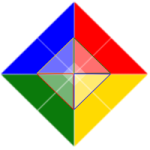
Can You Use Colour Energies Activities with DISC Profiles?
Yes. Colour Energies activities can be used alongside DISC Team Building Activities to help teams explore, discuss and apply the behavioural differences they have already identified.
DISC and other colour-based profiling systems are not necessarily interchangeable. They may use different assessment methods, terminology and interpretations of behavioural preferences.
However, many colour-based profiling systems create the same practical question:
Once people understand their behavioural preferences, what do they actually do with that knowledge?
This is where Colour Energies can help.
Rather than replacing an existing DISC profile, Colour Energies team building activities provide practical ways for people to explore how different behavioural preferences affect communication, relationships, decision-making, teamwork and conflict.
How Do Colour Energies Activities Work with DISC?
DISC is commonly used to help people understand behavioural preferences around Dominance, Influence, Steadiness and Compliance.
Many people are also familiar with Red, Yellow, Green and Blue behavioural language through DISC-based approaches, workplace training and books such as Surrounded by Idiots.
Colour Energies activities build on that existing understanding.
They don’t require participants to abandon the terminology or profiling system they already use.
Instead, the activities shift the emphasis from:
“What is my profile?”
towards:
“What happens when people with different behavioural preferences have to work together?”
That creates a different type of learning.
Why Use Team Building Activities After DISC Profiling?
Completing a behavioural profile can generate considerable personal insight.
Someone may recognise that they naturally:
- move quickly towards decisions;
- want detailed information before committing;
- think aloud and generate ideas through conversation;
- or place particular importance on relationships, stability and inclusion.
Understanding those differences is useful.
But simply knowing that colleagues have different preferences doesn’t automatically improve teamwork.
Teams still need to explore questions such as:
- Why do we sometimes misunderstand each other?
- Which behaviours create frustration?
- What happens to our different styles under pressure?
- Why do some people want faster decisions while others want more information?
- How can we adapt our communication?
- How can we make better use of our differences?
A practical DISC team building activity can help move the learning from individual awareness into team behaviour.
Are DISC and Colour Energies the Same?
No.
Different behavioural profiling systems should not automatically be treated as interchangeable simply because they use colours.
They can have different theoretical foundations, assessments, terminology and interpretations.
Colour Energies does not need those systems to be identical.
Its purpose is different.
Colour Energies provides practical tools and activities that can enhance the learning created by many colour-based behavioural profiling systems.
If your team already has a language for discussing Red, Yellow, Green and Blue behavioural preferences, Colour Energies can help you use that understanding to create better conversations.
Do You Need DISC Profiles to Use Colour Energies Activities?
No.
Colour Energies activities can be used with teams that already have DISC profiles, teams familiar with another colour-based profiling system, or groups that simply want to explore behavioural differences.
There is an important distinction.
If you are interpreting an individual’s formal DISC assessment, you should work within the methodology and guidance of the DISC system being used.
But exploring observable behavioural differences does not necessarily require another assessment.
A team can discuss:
How do I typically approach this situation?
How might somebody with a different preference respond?
What might I find frustrating about their approach?
What could their approach contribute that mine doesn’t?
How could we work together more effectively?
This makes behavioural differences something the team can explore rather than simply a result contained within a profile report.
What Can DISC Team Building Activities Explore?
Colour-based activities can help teams explore several aspects of working together.
Communication
Different behavioural preferences can influence how much detail people want, how quickly they speak, whether they think before responding and how directly they communicate.
Recognising these differences can reduce misunderstanding.
Decision-Making
One person may want a decision immediately.
Another may want additional evidence.
Someone else may want the team involved before proceeding.
The disagreement may appear to be about the decision when the underlying tension is actually about how decisions should be made.
Conflict
Behaviour that one person considers efficient may be experienced by another as abrupt.
Careful questioning can be interpreted as negativity.
Enthusiasm can be mistaken for lack of focus.
A desire for harmony can be interpreted as reluctance to confront an issue.
Colour-based activities give teams a relatively neutral language for exploring these differences.
Team Strengths
Behavioural diversity can become an advantage when teams recognise what different approaches contribute.
The objective isn’t to create a team where everyone behaves in the same way.
It is to help people understand how to make better use of their differences.
Can Colour Energies Be Used with Surrounded by Idiots?
Surrounded by Idiots has introduced a very large audience to the idea of understanding behavioural differences through Red, Yellow, Green and Blue.
People who have read the book often recognise aspects of themselves, colleagues, managers or family members in the four colours.
The natural next question is:
What can I actually do with this understanding?
Colour Energies activities provide one way of taking four-colour behavioural awareness into practical conversations and team development.
You don’t need to reinterpret the book or turn it into another profiling assessment.
Instead, the colours can become a starting point for exploring how different people communicate and work together.
Moving from “Which Colour Are You?” to “What Happens Between Us?”
This is an important distinction.
Colour-based behavioural models can sometimes become simplified into:
“I’m Red.”
“She’s Blue.”
“He’s definitely Yellow.”
That may make behavioural preferences memorable, but labels alone don’t necessarily improve relationships.
A more useful conversation is:
What happens between us because we approach things differently?
For example, imagine two colleagues working towards an important deadline.
One wants to make a decision and move forward.
The other wants to check the information before committing.
Under increasing pressure, the first person pushes for an immediate answer.
The second person becomes even more determined to check the details.
One experiences delay.
The other experiences unnecessary risk.
Neither person needs to be wrong.
Understanding the behavioural dynamic allows them to discuss what is happening and agree a better way of working together.
That is where colour-based learning becomes practically useful.
Practical Colour Energies Tools for DISC Teams
Colour Energies has developed practical team tools that can complement learning from DISC and other colour-based behavioural approaches.
Colour Energies Team Building Card Game
The Team Building Card Game creates structured conversations around behavioural preferences and differences.
Teams can explore different perspectives, discuss how colleagues might respond and consider the implications for working together.
It does not require facilitator accreditation or another behavioural profile.
Colour Energies Building Blocks
Building Blocks provide a physical and visual way of exploring behavioural preferences.
They can be incorporated into facilitated discussions and team development activities to make differences easier to see and discuss.
Colour Energies Activities and Resources
Additional activities and facilitator resources can help teams explore specific issues including communication, behavioural differences and team dynamics.
The objective across these tools is consistent:
Turn behavioural awareness into conversation and application.
Can Colour Energies Enhance Other Colour-Based Profiles?
In many cases, yes.
The same principle can apply where teams have previously used other colour-based profiling approaches.
The important question isn’t whether two profiling methodologies are identical.
It is:
Does the team already have a useful understanding of behavioural differences that can be explored further?
If it does, practical activities can help people apply that learning.
Colour Energies therefore doesn’t need to replace an organisation’s existing profiling investment.
It can help them get more from it.
From Behavioural Profile to Better Teamwork
A profile can provide insight.
But the real value comes from what people subsequently do differently.
Do colleagues communicate differently?
Do they recognise why certain situations create tension?
Can they adapt their approach?
Can they discuss differences without making them personal?
Can the team make better use of behavioural diversity?
That is the opportunity after profiling.
Colour Energies helps bridge the gap between understanding behavioural preferences and applying that understanding when people actually have to work together.
Yellow Energy – In a Nutshell
Blue Energy – In a Nutshell
Green Energy – In a Nutshell
Can You Use Colour Energies Activities with DISC Profiles?