What’s the Difference Between Insights Discovery, DISC, C-me and Lumina Spark?
This article is part of our Team Communication Insights Centre.
Explore more Behavioural Profiling →
If you have been exploring behavioural profiling tools for your team, you may already have encountered several different models.
Insights Discovery, DISC, C-me and Lumina Spark are all used by organisations to help people better understand behaviour, communication and working relationships.
Some use colours.
Some use behavioural dimensions.
Some produce detailed individual profiles.
And while there are similarities between them, they are not simply different names for the same profiling system.
So what is the difference?
And, from a practical team-development perspective, does the profiling model you use matter as much as what you do with it afterwards?

Why do so many behavioural profiling tools appear similar?
Many behavioural profiling systems attempt to make something extremely complex — human behaviour — easier to understand and discuss.
To do that, they provide a framework.
The framework might describe preferences around:
- communication
- relationships
- tasks
- decision-making
- pace
- detail
- assertiveness
- collaboration
- responses to different situations
The terminology and underlying methodologies vary considerably.
But the practical objective is often similar:
give people a useful language for recognising behavioural differences.
That common purpose explains why someone encountering several profiling systems may initially see considerable overlap between them.
The differences become clearer when we look at each approach individually.
That distinction matters.
What is Insights Discovery?
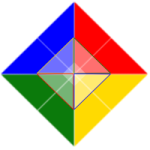
Insights Discovery is a behavioural development model that uses four colour energies as part of its framework:
Fiery Red, Sunshine Yellow, Earth Green and Cool Blue.
The colours provide an accessible language for discussing different behavioural preferences.
Broadly, they help people explore differences in areas such as pace, communication, relationships, decision-making and approach to tasks.
One of the strengths of a colour-based model is its accessibility.
People don’t necessarily need to remember complicated terminology to begin discussing behaviour.
Colour can provide useful shorthand.
The danger, as with any behavioural model, comes when that shorthand turns into a label.
Someone isn’t simply “a Red” or “a Blue”.
The colours describe behavioural preferences rather than defining the whole person.
What is DISC?
DISC is another widely recognised approach to behavioural profiling.
Rather than originating as a four-colour system, DISC commonly describes behaviour through four dimensions:
Dominance
Influence
Steadiness
Conscientiousness
Different DISC providers may present and interpret the model differently, and some versions also use colours to make the dimensions easier to recognise.
This is one reason people sometimes assume that every four-colour behavioural model is essentially DISC.
It isn’t.
The visual language may look familiar, but the assessment, methodology, terminology and interpretation can differ.
For a team, however, DISC can again provide a framework for discussing behavioural differences and how those differences affect working relationships.
What is C-me?
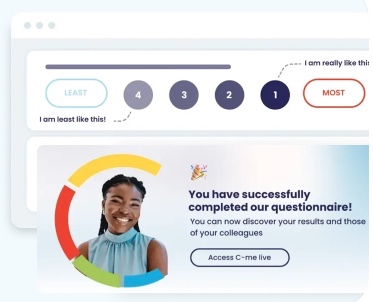
C-me also uses colour to help people understand behavioural preferences.
Its profiles and team-development applications provide a visual and accessible way of exploring how individuals may approach communication, relationships, tasks and working with other people.
Like other profiling approaches, its usefulness isn’t limited to receiving an individual report.
The greater opportunity comes when individual insights are brought together.
What does the combination of preferences within the team tell us?
Where might the team naturally work well?
What perspectives might be missing?
Where could differences create misunderstanding?
And how might people adapt their communication when working with colleagues whose preferences differ from their own?
Those conversations turn profiling from an individual exercise into a team-development tool.
What is Lumina Spark?
Lumina Spark approaches personality and behaviour differently again.
Rather than simply placing somebody into a single behavioural type, its model explores multiple qualities and recognises that behaviour can change according to context.
That introduces an important principle into behavioural profiling:
people are not static.
How somebody behaves naturally may not always be identical to how they behave in a particular working environment or under pressure.
This more nuanced view can help prevent one of the biggest problems associated with profiling — assuming that a profile predicts exactly how somebody will behave.
Are Insights Discovery, DISC, C-me and Lumina Spark interchangeable?
No.
They have different methodologies, terminology, intellectual property, assessments and approaches to interpreting behaviour.
It would therefore be misleading to describe one as simply an alternative version of another.
But there is an important distinction between asking:
“Are these profiling systems the same?”
and:
“Can insights from different behavioural models support similar team conversations?”
The answer to the second question is often yes.
For example, regardless of the profiling system used, a team might explore:
How do our different communication preferences affect meetings?
How do we respond when deadlines become tight?
Who naturally challenges an idea?
Who asks for more evidence?
Who notices how a decision might affect other people?
Who generates possibilities?
Those are conversations about people working together rather than conversations about a particular profiling brand.
Which behavioural profiling tool is best?
This is perhaps the wrong question.
There isn’t necessarily one behavioural profiling system that is universally “best” for every organisation, team or purpose.
A better question is:
What are you trying to achieve by using behavioural profiling?
If the objective is simply to give everyone an interesting profile, several systems can achieve that.
If the objective is improving communication, collaboration or team performance, something else becomes important:
what happens after people receive their profiles?
A sophisticated assessment followed by a single workshop may create considerable insight.
But insight isn’t automatically translated into behavioural change.
Teams still need opportunities to apply what they have discovered.
The profiling tool isn’t the intervention
This distinction is easy to miss.
The behavioural profile provides information.
The workshop helps people interpret it.
But the real intervention happens when people start doing something differently.
Perhaps a colleague begins asking rather than assuming.
A manager adapts how they communicate a decision.
Someone who usually dominates a discussion deliberately creates room for another voice.
A team recognises that what previously looked like resistance might actually be a need for greater clarity.
Those small behavioural adjustments are where profiling starts producing organisational value.
The profile helped create the conversation.
The conversation created the opportunity for change.
What if your organisation already uses a profiling system?
You probably don’t need to start again.
If your organisation has already invested in Insights Discovery, DISC, C-me, Lumina Spark or another behavioural profiling approach, there is potentially considerable value sitting within the knowledge people already have.
Instead of asking:
“Should we introduce another profiling tool?”
try asking:
“How much are we actually using what we’ve already learned?”
Can people still remember their insights six months later?
Does behavioural language appear naturally in team conversations?
Do people use their understanding to adapt?
Has communication changed?
Have working relationships improved?
If not, the opportunity may not lie in another assessment.
It may lie in bringing the existing insight back into everyday conversations.
From profiling systems to behavioural understanding
Different behavioural profiling systems give organisations different ways of looking at people.
That diversity can be useful.
But the model should remain the lens rather than becoming the subject.
The ultimate purpose isn’t to create a team that can explain DISC, Insights Discovery, C-me or Lumina Spark.
It’s to create a team that understands its differences well enough to work with them.
And that leads to another interesting question:
Do you actually need a behavioural profile to begin using colour energies with a team?
That’s where we’ll go next.
Return to the Team Communication insights Centre
Turning Awareness Into Action
This is where practical activities become valuable.
Not because people need another profile. But because they need opportunities to talk.
When teams discuss communication regularly:
- Awareness becomes understanding.
- Understanding becomes feedback.
- Feedback becomes action.
- Action becomes improvement.
That is where meaningful change begins.
Why Facilitation Matters
The most successful team development activities are rarely those that provide the most information.
They are the activities that generate the most meaningful discussion.
- When people exchange observations.
- Share perspectives.
- Challenge assumptions.
- Recognise strengths.
- Acknowledge blind spots.
The conversation becomes more valuable than the model.
The framework simply provides a structure. The workshop facilitator provides the space.
Take a look at our free guide: 7 Questions That Improve Team Communication and learn how to improve team communication without another profile.
So What Happens Next?
If your team has recently completed a profile workshop, the next step is not another profile.
The next step is conversation.
Because communication does not improve when people complete a profile.
Communication improves when people start talking differently to one another.
What’s the Difference Between Insights Discovery, DISC, C-me and Lumina Spark?
This article is part of our Team Communication Insights Centre.
Explore more Behavioural Profiling →
If you have been exploring behavioural profiling tools for your team, you may already have encountered several different models.
Insights Discovery, DISC, C-me and Lumina Spark are all used by organisations to help people better understand behaviour, communication and working relationships.
Some use colours.
Some use behavioural dimensions.
Some produce detailed individual profiles.
And while there are similarities between them, they are not simply different names for the same profiling system.
So what is the difference?
And, from a practical team-development perspective, does the profiling model you use matter as much as what you do with it afterwards?
Why do so many behavioural profiling tools appear similar?
Many behavioural profiling systems attempt to make something extremely complex — human behaviour — easier to understand and discuss.
To do that, they provide a framework.
The framework might describe preferences around:
- communication
- relationships
- tasks
- decision-making
- pace
- detail
- assertiveness
- collaboration
- responses to different situations
The terminology and underlying methodologies vary considerably.
But the practical objective is often similar:
give people a useful language for recognising behavioural differences.
That common purpose explains why someone encountering several profiling systems may initially see considerable overlap between them.
The differences become clearer when we look at each approach individually.
That distinction matters.
What is Insights Discovery?
Insights Discovery is a behavioural development model that uses four colour energies as part of its framework:
Fiery Red, Sunshine Yellow, Earth Green and Cool Blue.
The colours provide an accessible language for discussing different behavioural preferences.
Broadly, they help people explore differences in areas such as pace, communication, relationships, decision-making and approach to tasks.
One of the strengths of a colour-based model is its accessibility.
People don’t necessarily need to remember complicated terminology to begin discussing behaviour.
Colour can provide useful shorthand.
The danger, as with any behavioural model, comes when that shorthand turns into a label.
Someone isn’t simply “a Red” or “a Blue”.
The colours describe behavioural preferences rather than defining the whole person.
What is DISC?
DISC is another widely recognised approach to behavioural profiling.
Rather than originating as a four-colour system, DISC commonly describes behaviour through four dimensions:
Dominance
Influence
Steadiness
Conscientiousness
Different DISC providers may present and interpret the model differently, and some versions also use colours to make the dimensions easier to recognise.
This is one reason people sometimes assume that every four-colour behavioural model is essentially DISC.
It isn’t.
The visual language may look familiar, but the assessment, methodology, terminology and interpretation can differ.
For a team, however, DISC can again provide a framework for discussing behavioural differences and how those differences affect working relationships.
What is C-me?
C-me also uses colour to help people understand behavioural preferences.
Its profiles and team-development applications provide a visual and accessible way of exploring how individuals may approach communication, relationships, tasks and working with other people.
Like other profiling approaches, its usefulness isn’t limited to receiving an individual report.
The greater opportunity comes when individual insights are brought together.
What does the combination of preferences within the team tell us?
Where might the team naturally work well?
What perspectives might be missing?
Where could differences create misunderstanding?
And how might people adapt their communication when working with colleagues whose preferences differ from their own?
Those conversations turn profiling from an individual exercise into a team-development tool.
What is Lumina Spark?
Lumina Spark approaches personality and behaviour differently again.
Rather than simply placing somebody into a single behavioural type, its model explores multiple qualities and recognises that behaviour can change according to context.
That introduces an important principle into behavioural profiling:
people are not static.
How somebody behaves naturally may not always be identical to how they behave in a particular working environment or under pressure.
This more nuanced view can help prevent one of the biggest problems associated with profiling — assuming that a profile predicts exactly how somebody will behave.
Are Insights Discovery, DISC, C-me and Lumina Spark interchangeable?
No.
They have different methodologies, terminology, intellectual property, assessments and approaches to interpreting behaviour.
It would therefore be misleading to describe one as simply an alternative version of another.
But there is an important distinction between asking:
“Are these profiling systems the same?”
and:
“Can insights from different behavioural models support similar team conversations?”
The answer to the second question is often yes.
For example, regardless of the profiling system used, a team might explore:
How do our different communication preferences affect meetings?
How do we respond when deadlines become tight?
Who naturally challenges an idea?
Who asks for more evidence?
Who notices how a decision might affect other people?
Who generates possibilities?
Those are conversations about people working together rather than conversations about a particular profiling brand.
Which behavioural profiling tool is best?
This is perhaps the wrong question.
There isn’t necessarily one behavioural profiling system that is universally “best” for every organisation, team or purpose.
A better question is:
What are you trying to achieve by using behavioural profiling?
If the objective is simply to give everyone an interesting profile, several systems can achieve that.
If the objective is improving communication, collaboration or team performance, something else becomes important:
what happens after people receive their profiles?
A sophisticated assessment followed by a single workshop may create considerable insight.
But insight isn’t automatically translated into behavioural change.
Teams still need opportunities to apply what they have discovered.
The profiling tool isn’t the intervention
This distinction is easy to miss.
The behavioural profile provides information.
The workshop helps people interpret it.
But the real intervention happens when people start doing something differently.
Perhaps a colleague begins asking rather than assuming.
A manager adapts how they communicate a decision.
Someone who usually dominates a discussion deliberately creates room for another voice.
A team recognises that what previously looked like resistance might actually be a need for greater clarity.
Those small behavioural adjustments are where profiling starts producing organisational value.
The profile helped create the conversation.
The conversation created the opportunity for change.
What if your organisation already uses a profiling system?
You probably don’t need to start again.
If your organisation has already invested in Insights Discovery, DISC, C-me, Lumina Spark or another behavioural profiling approach, there is potentially considerable value sitting within the knowledge people already have.
Instead of asking:
“Should we introduce another profiling tool?”
try asking:
“How much are we actually using what we’ve already learned?”
Can people still remember their insights six months later?
Does behavioural language appear naturally in team conversations?
Do people use their understanding to adapt?
Has communication changed?
Have working relationships improved?
If not, the opportunity may not lie in another assessment.
It may lie in bringing the existing insight back into everyday conversations.
From profiling systems to behavioural understanding
Different behavioural profiling systems give organisations different ways of looking at people.
That diversity can be useful.
But the model should remain the lens rather than becoming the subject.
The ultimate purpose isn’t to create a team that can explain DISC, Insights Discovery, C-me or Lumina Spark.
It’s to create a team that understands its differences well enough to work with them.
And that leads to another interesting question:
Do you actually need a behavioural profile to begin using colour energies with a team?
That’s where we’ll go next.
Return to the Team Communication insights Centre
Turning Awareness Into Action
This is where practical activities become valuable.
Not because people need another profile. But because they need opportunities to talk.
When teams discuss communication regularly:
- Awareness becomes understanding.
- Understanding becomes feedback.
- Feedback becomes action.
- Action becomes improvement.
That is where meaningful change begins.
Why Facilitation Matters
The most successful team development activities are rarely those that provide the most information.
They are the activities that generate the most meaningful discussion.
- When people exchange observations.
- Share perspectives.
- Challenge assumptions.
- Recognise strengths.
- Acknowledge blind spots.
The conversation becomes more valuable than the model.
The framework simply provides a structure. The workshop facilitator provides the space.
Take a look at our free guide: 7 Questions That Improve Team Communication and learn how to improve team communication without another profile.
So What Happens Next?
If your team has recently completed a profile workshop, the next step is not another profile.
The next step is conversation.
Because communication does not improve when people complete a profile.
Communication improves when people start talking differently to one another.
Read other related articles.

What’s the Difference Between Insights Discovery, DISC, C-me and Lumina Spark? This article is part of our Team [...]
A good behavioural profile can create some powerful moments of recognition. This article is part of our Team Communication [...]